Showing posts with label cultural differences. Show all posts

Wednesday, January 22, 2025

Culture Shapes Needs


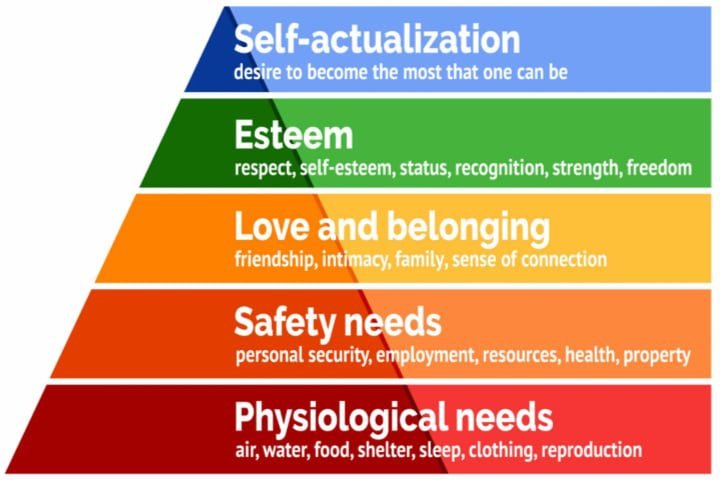
How Culture Shapes Our Understanding of Maslow’s Hierarchy of Needs

By John Fisher (assisted by AI)

Maslow’s Hierarchy of Needs is a widely recognized framework that categorizes human needs into a pyramid, starting with basic physiological needs and culminating in self-actualization. However, this framework is not universal in how it is interpreted or prioritized across different cultures. Cultural values and societal norms significantly influence how individuals and communities perceive and fulfill these needs. This article explores how culture impacts Maslow's hierarchy, from the prioritization of needs to the ways in which they are defined and achieved.


Key Points

1. Prioritization of Needs
In individualistic cultures, personal achievements and self-actualization often take precedence. For example, individuals might prioritize pursuing personal goals or career aspirations over community obligations. In contrast, collectivist cultures emphasize social connections, belonging, and community roles. Hofstede (1980) highlights that these cultural tendencies influence the order in which people seek to fulfill their needs.

2. Definition of Needs
The interpretation of self-actualization varies significantly between cultures. In Western societies, it might involve reaching personal potential or achieving career milestones. However, in collectivist cultures like China, self-actualization often revolves around fulfilling one’s role within the community or family (Nevis, 1983). These differences underscore the cultural specificity in how needs are perceived.

3. Barriers and Facilitators
Cultural norms can either support or limit access to certain levels of the hierarchy. For instance, societal expectations surrounding gender roles may restrict opportunities for self-fulfillment in some cultures. Markus and Kitayama (1991) emphasize that these barriers can shape how individuals pursue their aspirations, particularly in contexts where societal constraints are deeply ingrained.

4. Context-Relative Nature of Needs
Economic conditions also play a crucial role in shaping the hierarchy of needs. In economically disadvantaged cultures, physiological and safety needs are likely to dominate as survival takes precedence. Conversely, in more affluent societies, individuals often focus on esteem and self-actualization (Tay & Diener, 2011). This context-relative nature demonstrates how situational factors interact with cultural values to influence need prioritization.

5. A Dynamic Perspective
Culture is not static, and globalization has led to shifts in how needs are perceived. Exposure to different cultural norms can result in the blending of values, where individuals adopt aspects of both collectivist and individualistic approaches. This dynamic perspective allows for a more flexible understanding of Maslow’s hierarchy in a globalized world.


Conclusion
Maslow’s Hierarchy of Needs provides a valuable framework for understanding human motivation, but it is far from a one-size-fits-all model. Cultural context shapes how needs are prioritized, defined, and fulfilled, highlighting the importance of considering societal norms and values in applying this framework. Recognizing these cultural influences not only enriches our understanding of human behavior but also fosters greater empathy and inclusivity in addressing psychological health and well-being worldwide.


References
Hofstede, G. (1980). Culture's consequences: International differences in work-related values. Sage.

Markus, H. R., & Kitayama, S. (1991). Culture and the self: Implications for cognition, emotion, and motivation. Psychological Review, 98(2), 224–253.

Nevis, E. C. (1983). Using an American perspective in understanding another culture: Toward a hierarchy of needs for the People's Republic of China. Journal of Applied Behavioral Science, 19(3), 249–264.

Tay, L., & Diener, E. (2011). Needs and subjective well-being around the world. Journal of Personality and Social Psychology, 101(2), 354–365.

Triandis, H. C. (1995). Individualism & collectivism. Westview Press.


Keywords: Maslow’s hierarchy, cultural differences, psychological health, individualism, collectivism
Hashtags: #MaslowHierarchy #CulturalDiversity #PsychologicalHealth #GlobalPerspectives #HumanMotivation

Monday, November 04, 2024

Understanding Cultural Communication Differences


Understanding Cultural Communication Differences

by Dr. Tom Verghese

In high-context cultures, communication is often nuanced, where a simple "yes" might mean "yes," "no," or "maybe," depending on the facial expression, tone of voice, and body language accompanying it. This style emphasizes context and non-verbal cues. In contrast, low-context cultures value directness, where "yes" means "yes" and "no" means "no." Words are taken at face value, emphasizing clarity and straightforwardness.

A key challenge arises in cross-cultural communication. For example, in low-context cultures, listening is defined not just by hearing the words but by understanding their intended meaning. As Dave Old’s definition highlights, listening is not about whether you've heard but whether you've understood. Misunderstandings occur when individuals from low-context cultures fail to perceive a "no" that is implied rather than directly stated. This can lead to frustrations, as people from low-context backgrounds might wonder why others don't simply say "no" if they cannot meet a request or deadline.

An example of this challenge occurred in a meeting with a Korean organization. Following the presentation, one participant from a low-context culture felt optimistic, interpreting the Korean colleagues' polite expressions of interest as genuine. However, a more culturally aware observer recognized that the Koreans’ subtle gestures, such as a deep breath, indicated reluctance or reservation rather than true enthusiasm. This illustrates the importance of paying attention to non-verbal cues when communicating with those from high-context cultures.

In high-context cultures, indirect communication might seem like "beating around the bush" to those accustomed to directness. Conversely, individuals from high-context backgrounds may perceive low-context communicators as overly blunt or even rude. They may wonder, “Don’t you have any heart?” when statements are made too plainly. These differences highlight how communication styles can lead to misunderstandings, with each side struggling to interpret the other’s approach accurately.

Cultural perspectives on directness are relative and subjective. For instance, Australians pride themselves on being straightforward, calling things as they see them. Yet, an Australian client recounted how an American project manager’s directness shocked his team, reducing some members to tears, revealing an even higher level of bluntness. However, compared to Indonesians, Australians are seen as more direct. This relativity in cultural norms shows that one's perception of communication style is always influenced by their cultural point of reference.

Source:

Dr. Tom Verghese. (January 17, 2016). Understanding cultural communication differences. https://www.youtube.com/watch?v=0W9iLrfyq20&t=1s

Direct Versus Indirect communication styles, listening styles, body language, tonality, these are just some of the differences in cross-cultural communication.  Listen to Dr. Verghese explain some of these differences and the challenges that they can present.

Sunday, October 20, 2024

Beyond Words


Navigating Cultural Differences in Non-Verbal Communication

When an Asian individual, particularly in cultures like Japan, Korea, or China, presents a business card, the process is a formal and respectful exchange. The person offering the card typically holds the card with both hands, ensuring that the writing faces the recipient. This gesture allows the recipient to immediately read the information without having to adjust the card. While handing over the card, the individual slightly bows, demonstrating respect and humility. The card is usually held by the top corners to avoid covering any important details, and eye contact may be maintained briefly during the exchange, though in some cultures, a modest, respectful gaze may be preferred. This act is often seen as a reflection of professionalism and honor in many Asian business cultures. photo credit: canva

by John Fisher (assisted by AI)

Non-verbal communication plays a crucial role in human interactions, often conveying more information than verbal communication. Across different cultures, non-verbal cues such as appearance, gestures, posture, facial expressions, and touch can be interpreted in various ways, often leading to misunderstandings when people from different cultural backgrounds communicate. Understanding these cultural differences is essential in navigating international interactions and fostering mutual respect and understanding. This exploration will delve into several aspects of non-verbal communication, including general appearance, body movements, posture, gestures, facial expressions, eye contact, touch, smell, and paralanguage, highlighting the diversity and complexity of non-verbal cues across cultures.

General Appearance and Dress

In every culture, appearance and dress hold significance, as individuals make judgments based on how others look. In the United States, people are particularly concerned with personal attractiveness and the way they dress, sometimes to an almost obsessive level. However, what is considered attractive or modest can differ drastically from culture to culture. For instance, certain cultures may place more importance on covering specific body parts as a sign of modesty, while others may prioritize different styles of clothing to denote status or social standing. These cultural variations in dress serve as markers of identity and social hierarchy, where specific attire can reflect one’s role or importance within a society.

Body Movement

Body movement is a powerful non-verbal cue that communicates various messages, including attitudes toward people, emotional states, and the desire to control one’s environment. Actions such as leaning toward or away from another person, tapping fingers, or shifting position can subtly express feelings or intentions. Though there are more than 700,000 possible motions humans can make, making it impossible to catalog them all, understanding that body movements are essential in communication is crucial. Different movements can convey friendliness, impatience, or discomfort, depending on cultural context.

Posture

Posture is another key area where cultural differences emerge. For example, bowing is a sign of respect and social ranking in Japan, while it is less common and sometimes criticized in the United States. Slouching is considered rude in many Northern European countries, while keeping hands in pockets can be seen as disrespectful in Turkey. Similarly, sitting with legs crossed may be offensive in Ghana and Turkey, and showing the soles of one’s feet is considered rude in Thailand and Saudi Arabia. In the United States, gender differences also exist, with certain postures deemed more acceptable for men or women.

Gestures

Gestures vary significantly across cultures, both in their types and frequency of use. While it is impossible to catalog all gestures, it’s essential to recognize the vast variety of non-verbal communication methods and their potential to offend when misinterpreted. Cultures differ in how much gesturing is acceptable—some, like Mediterranean or Middle Eastern cultures, are highly animated, while others, such as many Asian cultures, are more restrained. Simple actions like pointing or counting also vary: in the U.S., people point with their index finger, while in Japan, the whole hand is used. Likewise, counting on fingers differs, with the thumb representing “one” in Germany and “five” in Japan.

Facial Expressions

Facial expressions, while often thought to be universal, differ in their intensity and interpretation across cultures. For example, many Asian cultures suppress facial expressions to avoid showing strong emotions, while Mediterranean and Arabic cultures may exaggerate feelings like grief. In the U.S., men often hide emotions such as sorrow, while women are more likely to express their feelings through facial expressions. Smiling can also be culturally significant; too much smiling may be seen as a sign of superficiality in some cultures.

Eye Contact and Gaze

Eye contact plays a central role in communication and can indicate attention, interest, and even power dynamics. In the U.S. and most Western cultures, direct eye contact is viewed positively and is often encouraged, especially in children. However, within the U.S., cultural variations exist, such as African Americans using more eye contact while talking but less while listening, compared to Anglo Americans. In Arabic cultures, prolonged eye contact is a sign of trust and engagement, while in Japan, Africa, and parts of Latin America, avoiding eye contact can signal respect. Prolonged gazes in Western cultures may also be interpreted as a sign of romantic interest.

Touch

Touch is a culturally determined form of communication, and each culture has its own rules regarding acceptable forms of physical contact. In the U.S., a handshake is a common greeting, and hugs or kisses are typically reserved for close friends or family members. However, African Americans often incorporate more touch during greetings, but touching the head can be seen as condescending. In contrast, Islamic and Hindu cultures avoid using the left hand for any interaction, as it is considered unclean. Islamic cultures generally prohibit touch between men and women but encourage same-sex physical contact, such as holding hands or hugging.

Smell

Cultural attitudes toward body odors and hygiene also differ widely. In the U.S., masking natural body odors with artificial scents is a multibillion-dollar industry. In contrast, in Arabic cultures, natural body odors are considered normal, while Asian cultures emphasize frequent bathing and sometimes criticize Americans for not bathing often enough.

Paralanguage

Paralanguage, or the non-verbal aspects of speech such as tone, pitch, and volume, can convey different meanings across cultures. In some Arabic cultures, loud speech signifies strength, while in Japan, loudness may indicate a loss of control. Women often speak more softly and at a higher pitch than men, and cultural expectations around the use of vocal segregates (such as "uh-huh," "mmm," or "shh") vary widely. In Japan, giggling can indicate embarrassment, while in India, belching after a meal is a sign of satisfaction.

Conclusion

Cultural differences in non-verbal communication underscore the complexity of human interactions. While some expressions, such as smiling or making eye contact, may seem universal, the meanings attached to them can vary significantly. By recognizing these differences, individuals can become more culturally aware and sensitive, reducing the likelihood of miscommunication and fostering stronger interpersonal relationships. Understanding non-verbal communication across cultures is not only about interpreting gestures or movements correctly but also about acknowledging and respecting the cultural context behind them.

Keywords

non-verbal communication, cultural differences, body language, facial expressions, paralanguage

Hashtags

#CulturalCommunication #NonVerbalCues #CrossCulturalAwareness #BodyLanguage #GlobalUnderstanding

Reference

Tidwell, C. (n.d.). Non Verbal Communication. Andrews University. https://www.andrews.edu/~tidwell/bsad560/NonVerbal.html